
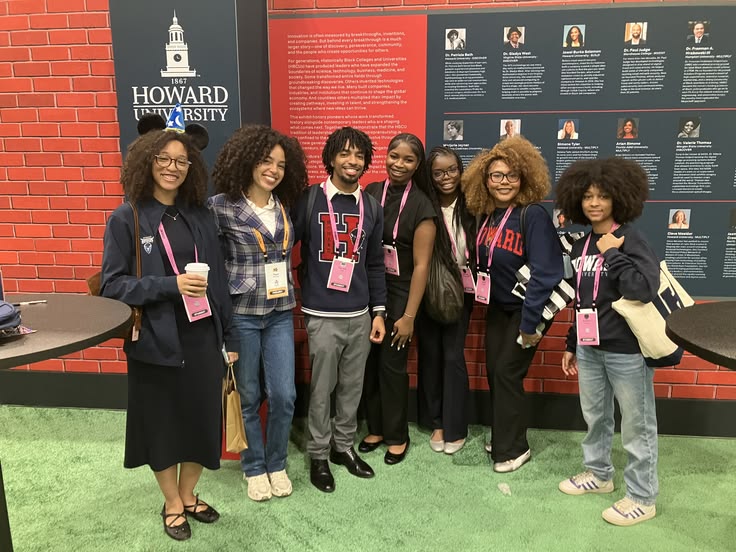
Cover photo: Computer Science students from Howard University pull up with BDPA and BDPA-DC during AFROTECH 2026 to discuss high-performance computing special interest groups (SIGHPC), tech career opportunities, and policy. — bdpatoday® photo ©2026
HOUSTON, TX (bdpatoday® ) — The outcome of this week’s midterm elections marked a seismic shift for information and communications technology (ICT) professionals or signaled a tectonic shift for Black Digerati. In the middle of the week’s keynotes and networking during AfroTech™, stunning midterm election results just popped sending shockwaves across the nation and our industry.
With Democrats taking majorities in Congress alongside a Republican administration, the battleground for digital policy moves into a complex era of divided government. Technology overtones sat squarely on most ballots, with voters across multiple states approving measures limiting data center expansion and exit polls confirming that artificial intelligence (Ai) and energy demands heavily influenced recent choices at the ballot box.

During AFROTECH 2026, Dr. Timnit Gebru stated she believes Black people should not be devalued in the pursuit of tech innovations, particularly in Ai. Dr. Gebru is the founder and executive director of the Distributed Artificial Intelligence Research (DAIR) Institute, author of the memoir “Deep Unlearning,” and a co-author of the research paper “On the Dangers of Stochastic Parrots: Can Language Models Be Too Big?” Her paper, which examined the dangers and implications of large language models, led to her being fired from Google in 2020, where she had co-led its Ethical AI Research Team, according to MIT Technology Review. © 2026 AfroTech, Blavity, Inc. All rights reserved.
These historic developments underscore our nation’s need for BDPA™ Members, AfroTech™ attendees, and other grassroots technical associations to unite technical and political leaders in pursuing federal appropriations to expand our digital workforce. In an increasingly connected society, we must invest substantially in reskilling experienced workers, improving community college infrastructure, expanding and sustaining HBCU research labs, and growing local JROTC cyber programs. Public-private partnerships and investments are also needed to rapidly expand BDPA’s renowned Student I.T. Education and Scholarship (SITES) programs in accordance with the ICT industry’s post-quantum legislative policies.
Technical and Policy Front Lines Highlighted at AfroTech™
Speaking on the main stage at AfroTech™, Congresswoman Ayanna Pressley (D-MA-7) urged Black technologists and innovators to confront the heavy environmental and social footprints of modern digital infrastructure. Data center development has triggered deep public concern over rising residential electricity rates, heavy grid strain, and neighborhood displacement. Conversations around infrastructure must move away from what data centers extract from local areas and turn toward concrete solutions such as heat recapture technology, which channels thermal energy from server racks directly into heating for nearby residential spaces and municipal buildings.

At the same time, policy momentum is building around algorithmic justice. Representative Pressley co-authored the Ai Civil Rights Act alongside Representative Yvette D. Clarke (D-NY-9) to prohibit companies from deploying biased algorithms and to mandate rigorous transparency disclosures. As our new 120th Congress convenes under incoming House leadership, federal lawmakers plan to introduce measures focused on independent safety testing for advanced models, corporate liability for algorithmic harm, and targeted taxation on massive data facilities. Complementary legislation like the Ratepayer Protection Act aims to ensure utility commissions require tech conglomerates to pay for their own grid buildouts rather than shifting financial burdens onto BDPA™ Members, alumni, and everyday consumers.
Immediate Opportunities for BDPA Members, Local BDPA Chapters, and Regional Special Interest Groups (SIGs)
The shift toward state-level decision making and legislative hearings creates clear pathways for BDPA™ professionals and students to lead or establish new government relations career paths for economic development, quantum computing infrastructures, cybersecurity (PQC), industrial control systems (ICS), and telecommunications (V2X).
Local chapters can immediately organize targeted grassroots outreach by bringing members together to urge congressional representatives to back and co-sponsor the Ai Civil Rights Act. BDPA™ members have the opportunity to show up at congressional, state, and local hearings to present public comments in sessions armed with technical expertise and community-level data. Local data, challenges, and tech opportunities matter.


National leadership and local BDPA™ chapters should establish dedicated Special Interest Groups (SIGs) focused on Sustainable Infrastructure and Algorithmic Bias. These new focus groups can easily formulate technical frameworks for community benefit agreements, help local municipalities negotiate fair terms with data center developers, and train software and prompt engineers to serve as independent auditors for Ai systems.
By bringing technical mastery directly into state or local utility proceedings, public hearings, and procurement standards with small businesses and HBCUs, BDPA™ members (bdpa.org/membership) ensure that those closest to community impact remain directly connected to the future of Industry’s technology and innovation.
— Sources: Blavity, Inc., BDPA-DC, and BDPA Houston
A N N O U N C E M E N T
SC26 • Chicago, IL • McCormick Place • November 15–20, 2026
International Conference for High Performance Computing, Networking, Storage, and Analysis

Leave a Reply